After 12th: The 3 Defence Paths—and Which Fits Your Profile
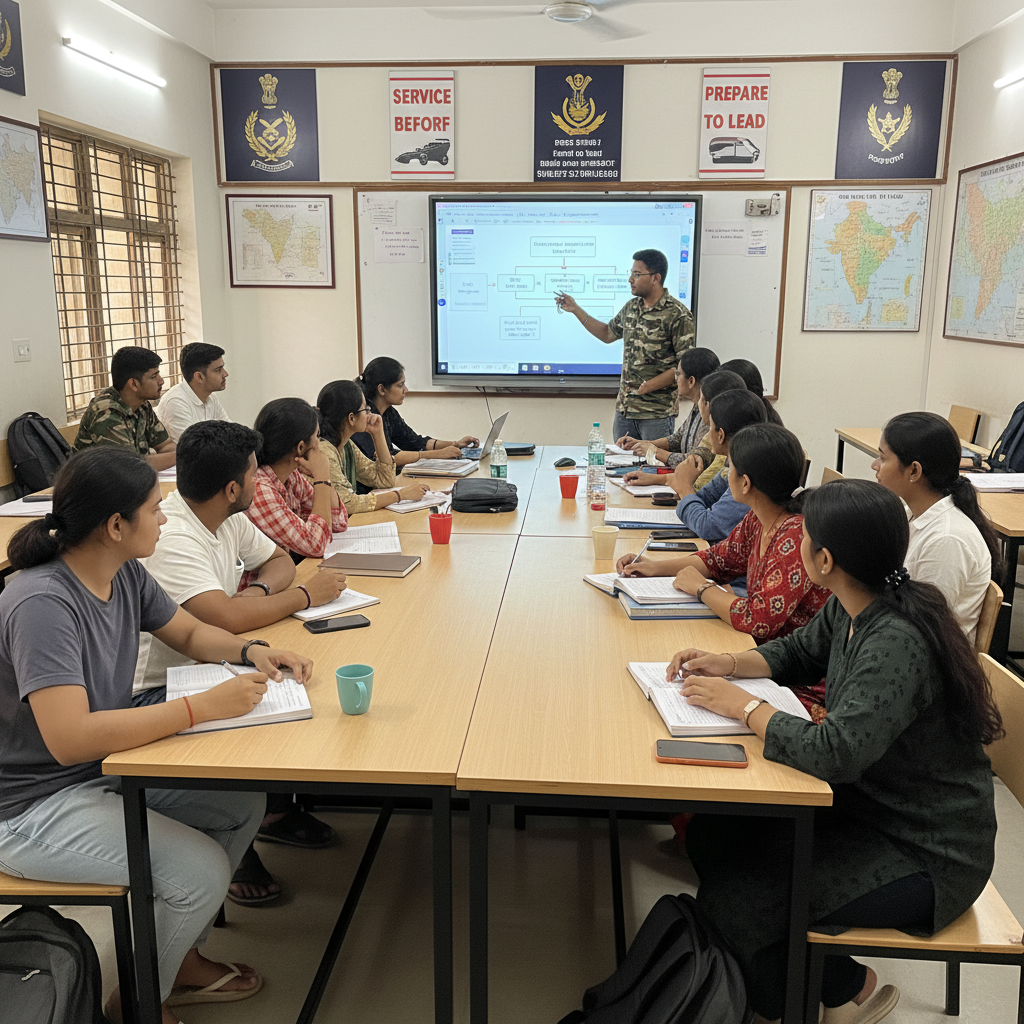
Explore three primary pathways to a career in the Indian Defence Forces after 12th: NDA, CDS, and AFCAT. This guide helps you assess which option suits your profile best, alongside preparation strategies and important insights.
Introduction
The Defence Exam after 12th offers a dedicated pathway to a rewarding career in the Indian Armed Forces. This guide will navigate you through the three primary examination routes—NDA (National Defence Academy), CDS (Combined Defence Services), and AFCAT (Air Force Common Admission Test)—and assist you in determining which path best suits your profile.
Overview of Defence Paths After 12th
-
NDA (National Defence Academy)
- Overview: The NDA is the foundational gateway into the Indian Army, Navy, and Air Force for candidates who have completed their 12th grade. Upon completion of this course, cadets receive a Bachelor's degree and proceed to serve in their respective branches. For insights into what to anticipate financially, check out our article on What an Army Officer Actually Takes Home After All Deductions.
- Eligibility: Candidates must have completed 12th grade with Physics and Mathematics.
- Age Limit: Candidates aged between 16.5 to 19.5 years.
- Exam Structure: The NDA exam consists of Mathematics and General Ability sections, followed by SSB interviews for shortlisted candidates.
-
CDS (Combined Defence Services)
- Overview: Designed for graduates, the CDS exam enables candidates to join various branches of the Armed Forces. However, those who are still in the transitional phase from 12th to college can focus on NDA while planning CDS if they pursue graduation later. A good starting point for your preparation is the CDS Prep: The Decision Framework Behind Every Topper's Schedule.
- Eligibility: Candidates must hold at least a graduate degree.
- Age Limit: The age limit varies from 19 to 24 years, depending on the particular service.
- Exam Structure: The CDS exam includes subjects such as English, General Knowledge, and Elementary Mathematics.
-
AFCAT (Air Force Common Admission Test)
- Overview: The AFCAT is specifically tailored for candidates aspiring to join the Indian Air Force, covering both technical and non-technical roles. To understand the financial aspects better, refer to AFCAT Salary Reality: What You Take Home vs. What Recruitment Ads Show.
- Eligibility: Candidates must have completed 12th grade with Physics and Mathematics, in addition to a graduate degree for non-technical branches.
- Age Limit: Candidates must be between 20 and 24 years old, with some age relaxations for specific branches.
- Exam Structure: AFCAT evaluates a range of subjects, including General Awareness, Reasoning, Numerical Ability, and English.
Comparison Table of Major Defence Exams
| Exam | Conducting Body | Eligibility | Age Limit | Exam Frequency |
|---|---|---|---|---|
| NDA | UPSC | 12th pass with PCM | 16.5-19.5 | Twice a year |
| CDS | UPSC | Graduation | 19-24 (varies) | Twice a year |
| AFCAT | IAF | 12th with PCM, Grad | 20-24 (varies) | Twice a year |
Importance of Choosing the Right Path
Selecting the right exam aligns with your academic strengths and career aspirations. Factors to consider include:
- Educational Background: Students from a science background may prefer NDA or AFCAT, while graduates can apply for CDS.
- Career Goals: Define whether you aim for career stability, technical advancement, or a versatile role within the forces.
- Interest in Specific Armed Forces Branches: Identify your preferred branch (Army, Air Force, or Navy) through research and self-assessment.
Preparation Strategy
1. Understanding the Syllabus
Familiarize yourself with the syllabus for each exam to prioritize your study time effectively. For a comprehensive approach to your preparation, consider our guide on AFCAT Prep: The Framework That Turns 3 Months Into a Selection.
2. Study Routine
Establish a daily study routine that allocates specific time slots for each subject:
- Mathematics: Focus on important topics like Algebra and Trigonometry. If you need assistance with practical strategies, check out 6 Arithmetic Shortcuts That Save 8 Minutes in CDS Maths.
- General Knowledge: Stay updated with current affairs and military history.
3. Mock Tests and Revision
Engage in regular mock tests to gauge your performance. Allocate a specific day in your weekly schedule for revisions, ensuring all concepts are reinforced. Mock tests are particularly crucial for effective preparation; hence it may be insightful to read about 5 Coordinate Geometry Patterns NDA Repeats Every Single Year to enhance your strategies.
4. Current Affairs
Keep abreast of national and international news through reputable sources, enhancing both your General Knowledge and comprehension skills. Noteworthy recent developments, like the Defense Awards Ceremony: Recognizing Valor in Armed Forces, can also serve as significant talking points.
Common Preparation Challenges
- Failing to adhere to the syllabus breakdown can lead to missing crucial topics.
- Inadequate physical fitness preparation can hurt SSB performance.
- Rushed last-minute studying often yields subpar results, underscoring the need for planned revision.
Expert Tips for Success
- Conceptual Understanding: Focus on grasping concepts rather than rote memorization.
- Regular Practice: Make use of past question papers for exam-aligned preparation.
SSB Interview Preparation
Once you clear the written exams, the next crucial step is the SSB interview, where your holistic personality is evaluated:
- Preparation Phases: This includes group discussions, psychological evaluations, and interviews. Each segment tests different aspects of your personality and adaptability.
- Physical Fitness: Regular workouts not only enhance your physical endurance but also boost mental strength—essential for SSB. Additionally, focusing on 15 OLQ Signals Assessors Read in You Before You Speak can provide insights into what to emphasize during preparation.
- Mock Interviews: Practice common interview questions and situational tests with peers or mentors to improve confidence and response fluidity.
Myths vs Reality
| Myth | Reality |
|---|---|
| You can pass without physical fitness | Physical fitness is crucial for SSB stages |
| Deep knowledge of tactics guarantees success | Personality assessment holds equal importance |
| Only coaching can help in preparation | Self-study, resources, and discipline also play a key role |
Key Takeaways
- Understand the unique structures and eligibility for NDA, CDS, and AFCAT to choose the best path for your career.
- Establish a robust preparation strategy, focusing on mock tests and syllabus adherence.
- Prepare physically for SSB interviews alongside your written preparation, as both aspects are critical for overall success.
FAQs
1. What is the best preparation strategy for NDA?
Focus on mastering Mathematics and General Ability while maintaining physical fitness for SSB.
2. How often are defence exams conducted?
Defence exams like NDA, CDS, and AFCAT are typically conducted twice a year.
3. What types of questions are asked in the AFCAT?
Questions cover General Awareness, Verbal Ability in English, Numerical Ability, and Reasoning, among others.
4. Is there any physical test for NDA or CDS candidates?
While there is no physical test for the written exams, physical fitness is evaluated during the SSB.
5. How can I improve my General Knowledge for defence exams?
Reading newspapers, journals, and dedicated current affairs apps can significantly enhance your General Knowledge.
Conclusion
Your journey into a rewarding career in the Indian Defence Forces begins with understanding your options and preparing strategically. With focused dedication and the right resources, you can successfully navigate your path to serve the nation, embodying the spirit of defence and discipline. Stay committed, disciplined, and resilient, and you’ll find your place among those who guard our nation's integrity.
📸 Visual Reference

Key Points to Remember
Most Important Topics
Focus on Mathematics, English, and General Knowledge for better scores.
Quick Revision Formula
Use mnemonics to memorize key concepts effectively.
Exam Strategy
Practice mock tests to familiarize yourself with exam patterns.
Do and Don't
Do stay updated with current affairs; don't ignore physical fitness.
Expert Tip
Understand concepts rather than rote learning for long-term retention.
❓ Frequently Asked Questions
🚀 Revision & Motivation
Start Your Defence Journey Today
With determination and the right preparation strategies, you can unlock a successful career in the Indian Defence Forces. Remember that every small step you take today contributes to your bright future. Stay focused, motivated, and committed to your dreams!
Discover the right defence exam path after 12th—NDA, CDS, or AFCAT—and strategies for successful preparation tailored to your profile.